Wednesday, June 25, 2014

The incubé-e-s describe their experience (Part 1)

The incubating agro-engineers in Ibi and Mongata shared with us earlier this month their experience with the project so far. Although they had to overcome many unexpected challenges, there is also a lot of optimism with the incoming cassava harvest and the numerous lessons learned. We start with the initial impressions from 5 incubé-e-s from Ibi.

Aaron Mbuyamba

 “Having 5 hectares at my disposal allowed me to express myself, to decide on what to cultivate, etc. (...) Normally season B starts on February 15, and I started planting on March 15. With regards to the climate, there was drought. (...) I learned many things, for example how to create and manage a business. Also training with GIS, which is useful to locate a plot on a map and to convince someone, to show with details on an image. (...) I had never worked with people before. I learned to manage people, with a team of up to 30 people. I learned to act like a real leader, to not give to caprices, to not get upset easily for example. In terms of diversification, I have fish that are growing well. I also always had in mind the idea of raising chicken.”

Dieudonné Otshudi

“The project brought expertise, practical training with management. (...) There was a delay in terms of execution with regards to the calendar, which caused many failures in our fields. (...) I had a contact with the reality of agroforestry. I learned how to manage a business; how to manage temporary workers. I am putting into practice what I learned. (...)[The incubator] gave us a hand. But I can’t place all my hope on it due to the uncertainty of rentability.”


Patrick Kabangi

"I succeeded only with peanuts so far. I planted 2.5 hectares and got 14 bags (50k each). The project gave me experience. I worked on a large space. (…) When I took my products out, the market was inundated. This is due in part to the fact that the warehouse isn’t built yet. (...) I improved what I learned in university. I got a field to express myself, to showcase my talents. (...) The temporary workers from the village know the area well and some of them have an agricultural experience that was helpful. By listening to them we can improve our results. (…) It’s my dream to be able to manage a large agricultural business one day.”
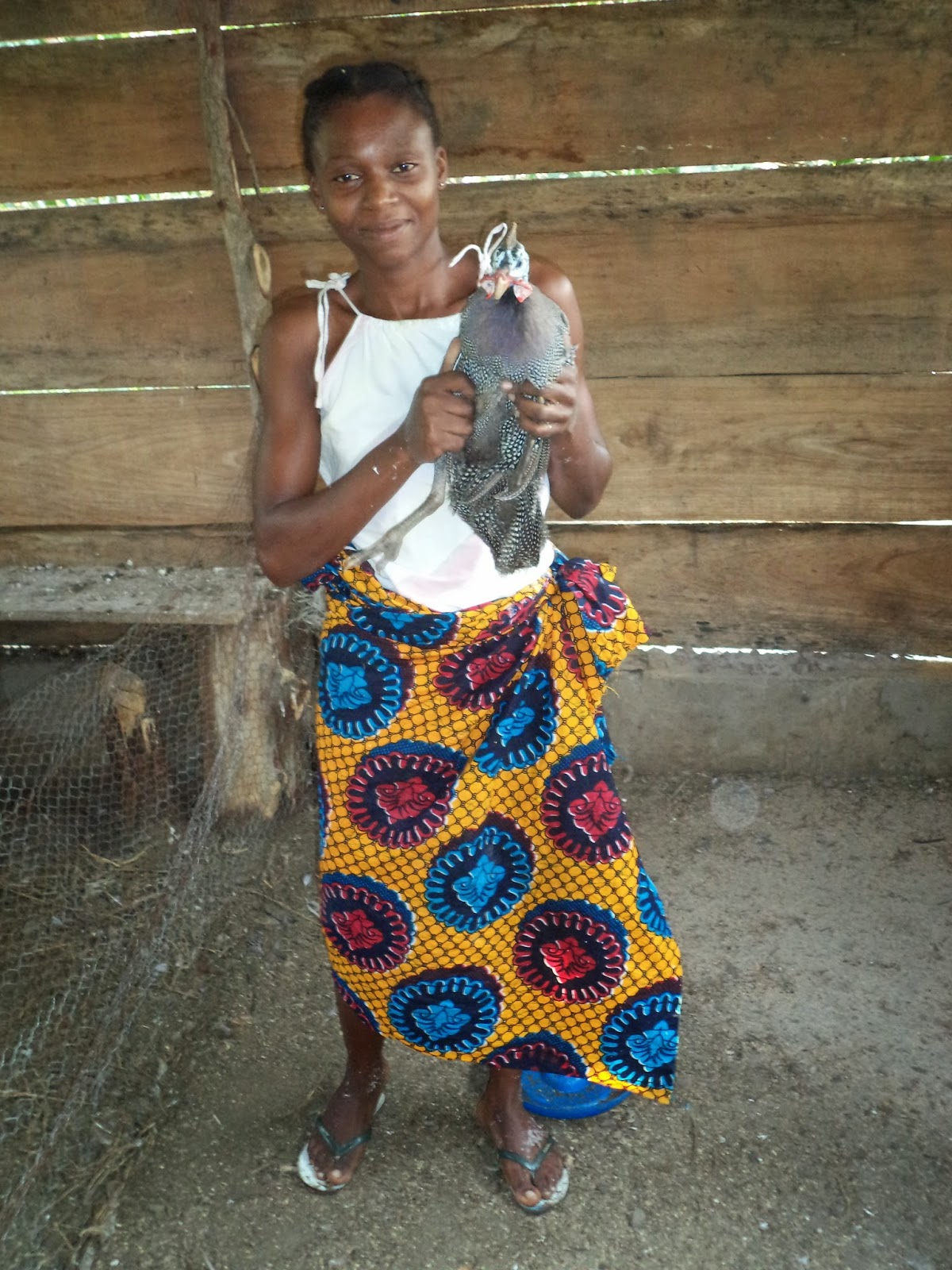

Michelle Sangwa Fatuma

“Despite the delays, we can see the project. (...) Due to the delays, we haven’t been able to intercrop with the cassava. (…) Planting crops over large spaces, managing workers who can be difficult but with whom we still have to work, living with other people outside the family… This is where I am seeing what I will be doing tomorrow. I have the opportunity to have a parcel of my own. (...) What interests me most is transformation. I need to do an experiment with making yogourt out of soybean, and create my own brand.”


Sylvain Shamba


"This project taught me many things. First, there is agroforestry. There are many techniques I have learned. Second, there is entrepeneurship. Third, there is the fund at my disposal for the fields and raising animals. (...) We teamed up into a group of 4 and made a canteen where we can eat together. We came to know each other better. Now, we know one another and complete each other well. (...) I am optimistic. With the means I will have after the harvest and the techniques I’ve learned here, I will launch my business. The future is good.”

Monday, June 2, 2014

Makala Renouvelable featured in two conferences in Guelph

Last month, Makala Renouvelable project was featured in two conferences in Guelph, providing an opportunity to share the ideas behind and achievements of the project with various scholars and development professionals from around the world.

At the Guelph Development Symposium, organized by the Ontario Veterinary College, taking place May 4-7, the presentation on the project was part of a session on value-added family agriculture, where experts from Asia, Africa and Latin America shared innovative practices developed to improve opportunities for small farmers. Now three years running, the Guelph Development Symposium has seen the convergence of hundreds of academics and practitioners in the field of development, placing special emphasis on the role of agriculture.


Later that month, on May 19-20, the project was the subject of a poster presentation at the Glocal Classroom seminar, an event organized in collaboration with universities in South Africa, Australia and Sweden. Scholars and practitioners from all continents were here to discuss innovations in communication and education with regards to rural development. 

Sunday, May 18, 2014

Project Update (September 2013 to March 2014)

Results from the first short season of growing are starting to trickle in from Ibi, where the Incubées are experimenting with agroforestry production. During this first short season, each incubée was allocated 2.5 hectares on which to plant the acacia and cassava intercropping along with a shorter-term crop. Most of them chose to grow niebe beans, soybeans, peanuts, or a combination of different crops.

Bobette and her first niebe harvest


As a reminder, this first short season is only the beginning of the acacia tree’s 6-year growth period. During this time, the cassava harvest will also be possible after 18 months. For these first few months, the incubées were able to reap benefits averaging $220.50 US, a promising start. Benefits varied between a profit of $1,187 and a loss of $564. Of the 20 incubées, 8 of them made benefits over $200, while 5 had losses between $20 and $564. A major part of the losses is attributed to the choice of variety of niebe beans that yielded almost nothing. Most of the incubées’ income however is expected to come from cassava, which should be harvested in June. 

Friday, March 21, 2014

Makala Renouvelable featured at CIDA

Makala Renouvelable was the subject of a presentation last week at the Canadian International Development Agency (CIDA) which partly funds the project. We are happy to make the presentation available here.


It is also our pleasure to announce that our presentation at the Global Development Symposium in Guelph will take place on May 5, between 3:45 and 5:15. More information and a full schedule available at: www.gds2014.ca.


Tuesday, March 4, 2014

Makala Renouvelable at the Global Development Symposium

The Makala Renouvelable Project will the subject of a presentation at the Global Development Symposium, to be held in Guelph on May 4-7, 2014.

The conference will focus on the three components of global public health, community empowerment, and food and water security. It takes place bi-annually and attracts dozens of scholars who share their experience working in development projects around the world.

Follow this blog for more details as the conference draws nearer.

Thursday, February 13, 2014

Project update

Our collaborator Elsa from the University of Guelph – Campus d’Alfred, recently came back from mission with the following project updates.


At ISAV, the installation of a tree nursery is now under way, with a view to support the development of agroforestry in Ibi. ISAV has been involved in the agricultural development of Ibi for well over a decade now.


In Ibi meanwhile, teams of Incubées and local villagers are being formed to conduct field investigations with the local population, including peasant families, to find out more about their situation and needs, in order to help design the next phase of the project. To the right, we can see Père Daniel from ISAV receiving training to use SPSS, for the purpose of data entry.


The incubées are also involved in setting up workshops to help diversify local production. To the left, we can see Rolfe building a rabbit hutch, while below Bobette is taking part in the first harvest of niebe, a type of bean. It is worthwhile to know that in Ibi, particularly among people from the Téké ethnic group, agricultural production is almost entirely based on the cultivation of cassava. 

Thursday, January 9, 2014

Cassava, at the center of Makala Renouvelable

Photo: Elsa Vasseur
At the center of the project's objectives lies the sustainable production of cassava, notably in the form of micro-chips which can be more effectively commercialized by small farmers. Cassava is the most important staple food in this region of DR Congo, and the basis of subsistence farming in Ibi. The Makala Renouvelable project is helping small farmers integrate the cultivation of cassava with sustainable agroforestry practices, while developing capacity for processing and marketing to create a steady source of income for farmers.

In the picture, cassava micro-chips are being dried for further processing. Cassava flour is a popular food item in Kinshasa, a market opportunity Ibi farmers are hoping to benefit further from.